Tarot FAQs
Can Tarot Cards Be Wrong? Understanding Accuracy vs. Free Will
July 1, 2026
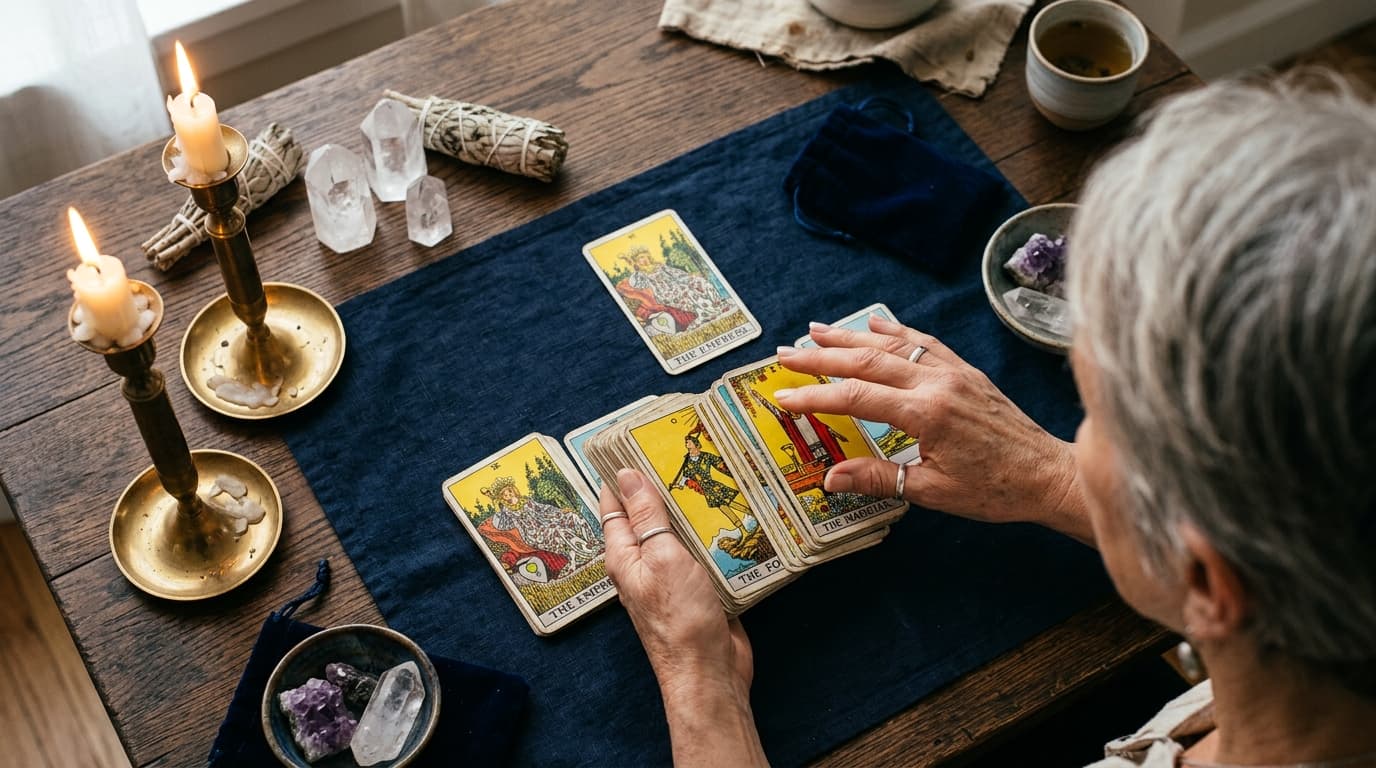
It is one of the most common questions both skeptics and tarot enthusiasts ask: "Can tarot cards be wrong?"
You get a reading where the reader confidently predicts you will get a specific job offer by May, or that a romance will flourish by summer. May comes and goes, summer turns to autumn, and the outcome looks completely different from what was shown in the cards.
Does this mean tarot is fake? Does it mean your reader was incompetent? Or is something far more interesting going on beneath the surface?
To understand why tarot predictions sometimes miss the mark, we have to explore the relationship between predictive accuracy, perception, and human free will.
1. Tarot Reflects Trajectories, Not Fixed Scripting
The single biggest misconception about tarot is that the future is written in stone like a movie script that has already been filmed.
In reality, the universe is a fluid web of possibilities. When a reader lays down cards, they are capturing the most probable timeline based on the energy, choices, mindsets, and momentum present at the exact moment of the reading.
Think of it like a weather forecast:
- If a meteorologist states there is an 80% chance of rain tomorrow afternoon, they are analyzing current atmospheric pressure and wind patterns.
- If a sudden cold front shifts overnight, the rain might miss your town entirely.
- Was the meteorologist "wrong"? No, they accurately analyzed the data at 5:00 PM yesterday. But environmental conditions shifted.
In human life, free will is the ultimate cold front. If a card predicts a romantic connection with someone, but that person chooses to avoid emotional vulnerability or move to another country, their free will reshapes the outcome.
2. Reader Interpretation and Bias
The cards themselves are ink on paper: neutral archetypal symbols. The reading comes from the interpretation of those symbols.
Predictions often fail due to human factors in the reading room:
- Wishful Thinking: If a reader (or client) desperately wants a specific outcome, they may interpret ambiguous cards like the Seven of Cups or The Moon as a guaranteed "yes" rather than a warning about fantasy.
- Over-Specificity: Trying to predict exact dates, names, or dollar amounts often forces broad archetypal symbols into overly narrow boxes.
- Lack of Context: A reader might see the Three of Wands and assume a business trip is coming, when in reality it represents a mental breakthrough regarding long-term planning.
We explored the mechanics of reader skill in our guide on how to find the best tarot reader in Austin.
3. The Observer Effect and Self-Fulfilling Prophecies
There is another fascinating reason tarot outcomes shift: the reading itself changes your behavior.
If a tarot card reveals that your current business plan is heading toward failure (symbolized by the Ten of Wands), you don't just sit back and let it crash. You work harder, rewrite your budget, and fix your marketing.
Months later, your business prospers. Was the card wrong? No! The reading successfully alerted you to a hidden danger, allowing you to alter your choices and change the outcome. The reading succeeded precisely because the prediction failed to come true.
Empowered Reading vs. Fatalism
If you use tarot as a fatalistic fortune-telling machine, you will inevitably end up disappointed or confused. But if you use tarot as a strategic mirror to examine your choices, habits, and blind spots, it becomes virtually impossible for a reading to be "wrong."
Tarot doesn't take away your power to decide your life; it hands the steering wheel back to you.
Interested in experiencing how an intuitive, empowering tarot reading works? Book an insightful reading with Austin Tarot Reader today.
✨ Want to go deeper?
Book your personalized tarot reading with Austin Tarot Reader today.
Book a Reading