Tarot Meanings
The Psychology of Tarot: How Carl Jung Used Archetypes to Understand the Mind
March 13, 2026
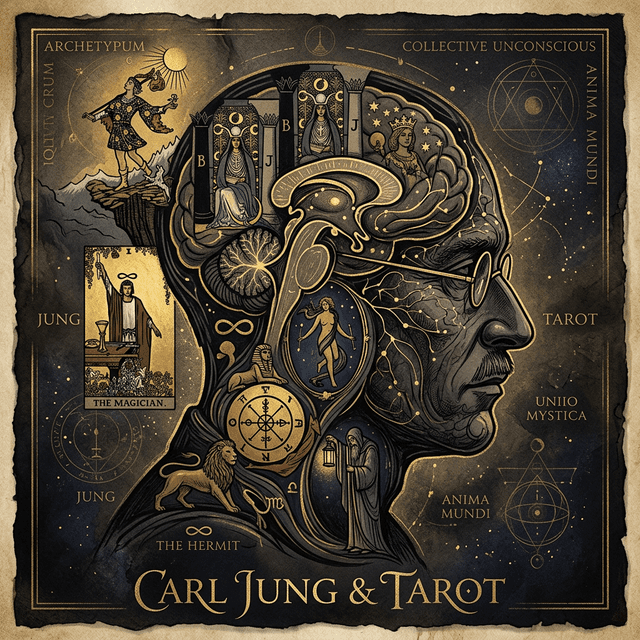
While tarot is often viewed through a mystical or spiritual lens, it has a surprisingly deep foundation in modern psychology. Much of our contemporary understanding of the cards comes from the work of Carl Jung, the Swiss psychiatrist who founded analytical psychology.
Jung believed that the images in the tarot deck weren't just random symbols, but "archetypes", universal patterns and themes that reside in the collective unconscious of all humanity.
What is an Archetype?
An archetype is a fundamental human image or situation that we all recognize intuitively. We see them in myths, fairy tales, and modern movies. In the tarot, the Major Arcana act as a gallery of these archetypes:
- The Fool: The archetype of the inner child or the beginning of a journey.
- The High Priestess: The archetype of the unconscious mind and secret knowledge. We’ve explored her role in unlocking secrets before.
- The Hermit: The archetype of the wise old man or the internal search for truth. This is a key figure for anyone finding their inner voice.
- The Shadow: Represented in tarot by The Devil, this archetype embodies the parts of ourselves we deny or repress.
Synchronicity: Why the "Right" Cards Appear
One of Jung’s most famous concepts is synchronicity, the idea of "meaningful coincidences." Jung noticed that when we pull a card, it often mirrors our internal state with uncanny accuracy.
From a Jungian perspective, the cards don't "know" the future. Instead, they act as a mirror. When you see a card like Death, your mind project its own context onto it. You might realize it’s time for a necessary rebirth because that’s what your subconscious has been trying to tell you all along.
Tarot as a Tool for Individuation
Jung’s ultimate goal for any individual was individuation, the process of integrating the disparate parts of our personality into a whole, cohesive self.
Tarot is an incredible tool for this process because it forces us to look at the full spectrum of human experience. It demands that we confront shadow aspects of success and the challenges of the ego. By journaling with these images, we can bring the unconscious into the light.
The Modern Synthesis
Today, we use Jung’s insights to move tarot away from fatalistic "fortune telling." We use the cards as a language for the psyche. Whether you are navigating a career transition or simply trying to understand yourself better, the archetypal power of the cards provides a roadmap for the human soul.
Are you ready to use the cards to explore the architecture of your own mind? Book a psychological-intuitive session with Austin Tarot Reader today and let's see what your archetypes have to say.
Keywords: psychology of tarot, Carl Jung archetypes, collective unconscious tarot, Jungian tarot reading, synchronicity in tarot, tarot as a psychological tool, major arcana archetypes, Austin tarot reader
✨ Want to go deeper?
Book your personalized tarot reading with Austin Tarot Reader today.
Book a Reading