Tarot Meanings
Understanding Reversals: Should You Read Reversed Tarot Cards?
August 4, 2026
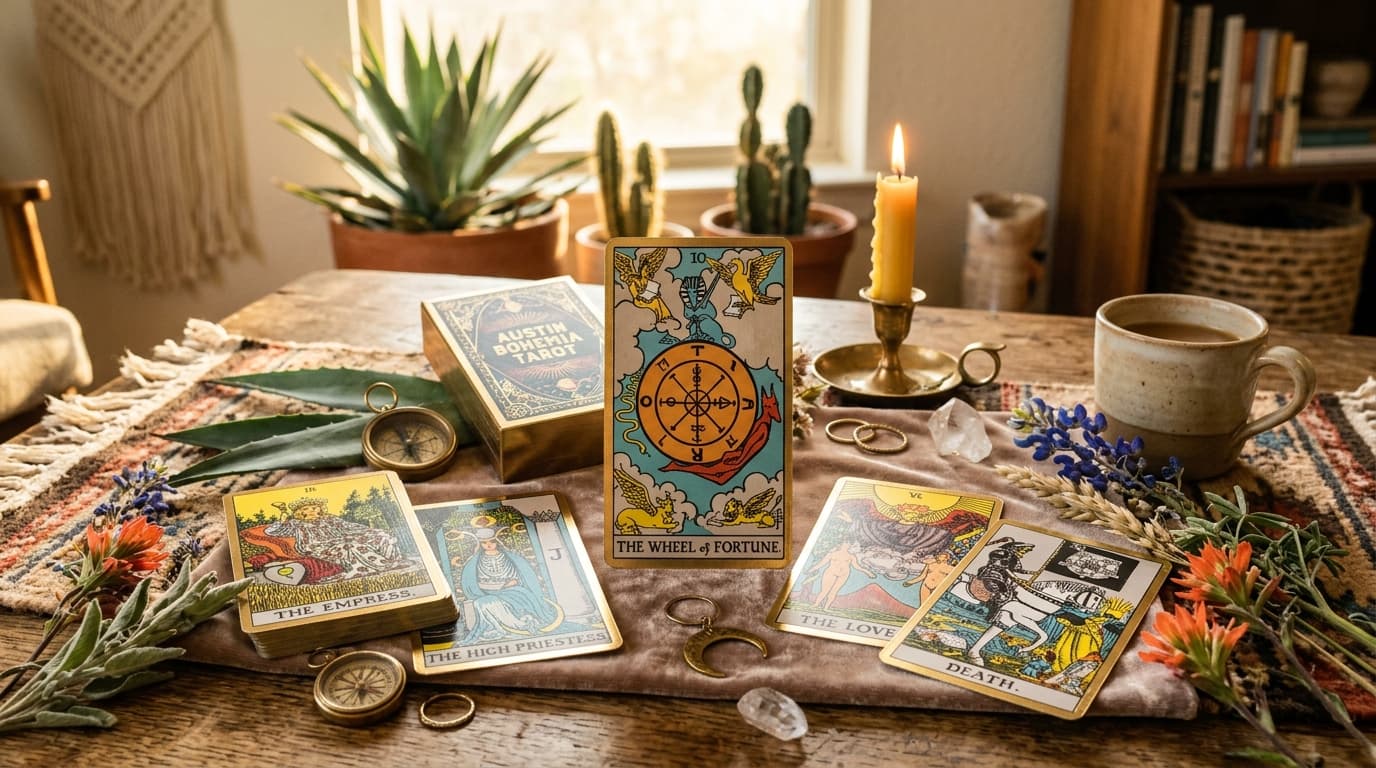
When shuffling a tarot deck, it is inevitable that some cards will end up upside down. For beginner readers (and clients watching a deck laid out on the table), seeing a card land reversed often sparks an immediate feeling of dread.
Does an upside-down card mean the opposite of its upright meaning? Does it automatically turn a good card into a bad one? Or should you just flip it right-side up and ignore the reversal entirely?
Debates over reversed cards have animated tarot communities for decades. The good news is that there is no single "correct" rule. Understanding how reversals work will help you decide whether to include them in your personal practice.
Do You Have to Read Reversals?
First, let's dispel a common myth: You do not have to read reversed cards to be an exceptional tarot reader.
Many master readers choose to read all 78 cards exclusively upright. They reason that the upright deck already contains the full spectrum of human experience: light, shadow, joy, and sorrow. For instance, the upright Three of Swords already represents heartbreak, while the upright Ten of Wands already covers exhaustion. You don't need a reversal to find challenge in the deck.
However, incorporating reversals effectively doubles your symbolic vocabulary from 78 nuances to 156. If you choose to read reversals, here are the four most useful ways to interpret them:
4 Nuanced Ways to Interpret Reversed Cards
Instead of assuming a reversal means "bad news," try viewing the inverted card through one of these four lenses:
1. Internalized or Hidden Energy (The Inside Job)
An upright card often represents external circumstances and visible events. A reversed card can signify that the same archetype is operating privately within your internal world.
- Upright The Hermit: Seeking solitude or physical retreat.
- Reversed The Hermit: Feeling lonely on the inside, or refusing to listen to your own internal wisdom.
2. Blocked or Resistance Energy
A reversal can highlight where energy is stuck, delayed, or being actively resisted.
- Upright The Empress: Natural abundance, creativity, and flow.
- Reversed The Empress: Creative blockages, self-neglect, or difficulty giving yourself permission to receive care.
3. Extreme or Shadow Manifestation (Too Much / Too Little)
A reversed card can signal that the upright energy is being pushed to an unhealthy extreme.
- Upright Four of Pentacles: Managing finances and keeping healthy boundaries.
- Reversed Four of Pentacles: Either extreme greed and hoarding (too much holding on) or reckless financial loss (too little boundaries).
4. Returning to Balance / Resolution
Sometimes a reversal indicates that a challenging phase is finally winding down and coming to an end.
- Upright Eight of Swords: Feeling trapped by restrictive thoughts.
- Reversed Eight of Swords: Stepping out of mental captivity, taking off the blindfold, and reclaiming control.
We explored similar archetypal nuances in our analysis of the shadow side of the Sun card.
How to Handle Reversals in Your Own Practice
If you are learning tarot and find reversals overwhelming, simply keep your deck turned in one direction while you build confidence with the core 78 meanings.
When you are ready to experiment with reversals, try using them specifically for self-reflection spreads. Ask yourself: "Is this energy happening around me, or is it an internal conversation I need to address?"
Whether upright or reversed, every card in the deck serves as a guide post for self-awareness.
Want to explore the deeper symbolic nuances of your personal cards? Book an intuitive session with Austin Tarot Reader today.
✨ Want to go deeper?
Book your personalized tarot reading with Austin Tarot Reader today.
Book a Reading